Western Boots Christmas Sublimation Png Review
As a designer who spends more time staring at stitch density charts and fabric swatches than I care to admit, I approach every new digital asset with a healthy dose of skepticism. The market is flooded with generic clipart, but finding a design that balances thematic charm with technical viability for actual production is rare. Recently, I evaluated the Western Boots Christmas Sublimation Png, a graphic listed under Crafts and Graphics, to see if it holds up when translated from a screen to a hoop. This review focuses on its practical application for embroidery designers, small business owners, and crafters who need reliable assets for their handmade products.
First Impressions and Visual Personality
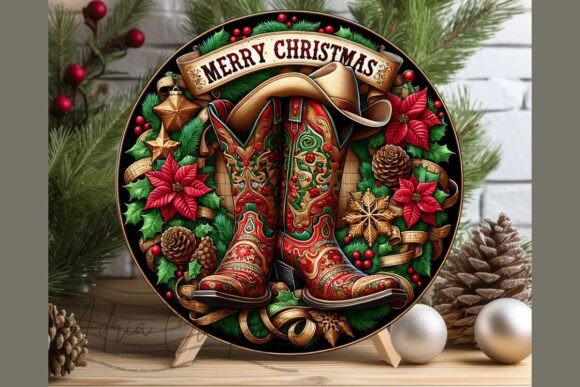
The immediate appeal of this design lies in its specific niche appeal. It merges two distinct aesthetics: the rugged, classic silhouette of Western boots and the cozy, festive warmth of the holiday season. For an embroidery project, this combination creates a strong visual hook. It feels less like a generic holiday greeting and more like a curated lifestyle statement, which is exactly what modern consumers look for in boutique items.
Visually, the design presents a clean, round composition. In the context of machine embroidery, circular designs are often easier to digitize because they allow for balanced distribution of stitches around a central point. The transparent background provided in the download ensures that there are no unwanted white boxes or artifacts interfering with your layout planning. When you place this onto a mockup, it immediately suggests a rustic, farmhouse, or country-chic vibe. It does not feel cluttered; instead, it offers enough detail to be interesting without overwhelming the eye, which is crucial for maintaining stitching clarity.
Real-World Application: From Screen to Stitch
I tested the conceptual placement of this embroidery file across several common product categories to gauge its versatility. The most natural fit appears to be custom apparel, particularly sweatshirts and t-shirts. A crewneck sweatshirt in cream, burgundy, or denim blue would provide the perfect canvas for this design. The contrast between the soft fabric texture and the crisp lines of the boot illustration creates a tactile experience that customers appreciate.
Beyond apparel, this design shines as a decorative accent on home goods. Imagine this stitched onto a kitchen towel or a tea towel for a hostess gift. The round shape fits perfectly within the standard hemmed borders of these items, creating a cohesive look. Similarly, for a tote bag design, placing this centered on a canvas tote adds a touch of seasonal personality that feels both functional and fashionable. It works well for holiday markets where buyers are looking for unique, non-mass-produced items.
For those selling on platforms like Etsy, this asset can elevate your small shop product line. It is ideal for personalized gifts, such as embroidered patches attached to beanies or caps. However, caution is advised with curved surfaces. While the design itself is flat, applying it to a cap requires careful hooping and stabilization to prevent puckering. If executed correctly, the result is a high-quality embroidered patch that commands a higher price point due to its perceived craftsmanship.
Technical Considerations and Stitching Challenges
While the visual appeal is strong, any experienced designer knows that beauty must be backed by technical feasibility. The description notes that this is a sublimation PNG and not an SVG cut file. This distinction is vital. You cannot use this directly for vinyl cutting or laser engraving. Instead, it serves as a reference image for tracing, digitizing, or using as a guide for applique work. If you are converting this into a machine embroidery design, you will need to interpret the shapes into stitches.
One area requiring careful attention is stitch density. If the original artwork contains fine details, such as laces on the boots or intricate patterns on the surrounding elements, these may become muddy if the stitch count is too high. I recommend reviewing the design in black and white to check contrast levels before committing to thread colors. Dark fabrics can swallow up lighter thread shades, so testing on scrap fabric is non-negotiable. Use a proper stabilizer appropriate for your fabric type—cut-away for stretchy knits and tear-away for wovens—to ensure the final product maintains its shape after washing.
Another potential pitfall is the use of satin stitches for large areas. If the design relies heavily on dense satin stitching for the boot outlines, it may create a stiff, raised texture that could be uncomfortable against the skin, especially on baby clothes or delicate fabrics. In such cases, utilizing fill stitches or a combination of running stitch and fill stitch might yield a softer, more professional finish. Always inspect small details closely; tiny elements often get lost in the hoop or require excessive trimming of jump threads, which increases production time.
Strategic Placement for Maximum Impact
To maximize the commercial value of this digital embroidery file, consider where you place it on the finished product. Center chest placements work well for a classic look, while left-side pocket placements offer a subtle, sophisticated touch. For home decor items like pillow covers, centering the design allows the round shape to act as a focal point, drawing the eye inward. Avoid placing this design on thin or highly textured fabrics, as the stability required for clean stitching may not hold up, leading to distortion or poor registration.
Final Verdict for Craft Business Owners
The Western Boots Christmas Sublimation Png is a solid addition to the library of any creative entrepreneur focused on seasonal merchandise. It successfully captures a specific aesthetic that resonates with a broad audience interested in rustic, holiday-themed goods. Its strength lies in its clear theme and adaptable layout, making it suitable for a wide range of embroidery projects, from personal gifts to commercial inventory.
However, success depends entirely on execution. As a designer, your job is to translate this static image into a dynamic stitched piece. Pay close attention to thread color selection, ensuring that the tones complement each other and stand out against your chosen fabric. Confirm licensing terms before selling finished items or distributing digital products, as commercial rights vary. By treating this asset with the same rigor you would apply to any complex digitization task, you can produce a handmade product that feels authentic, high-quality, and ready for the holiday rush. It is not just a picture; it is a blueprint for a successful seasonal collection.